Cocobi Little Safety Hero -kid
- 3.5
- Rating
- 500.00K
- Installs
- Free
- Price

 Analysis by App-foxy
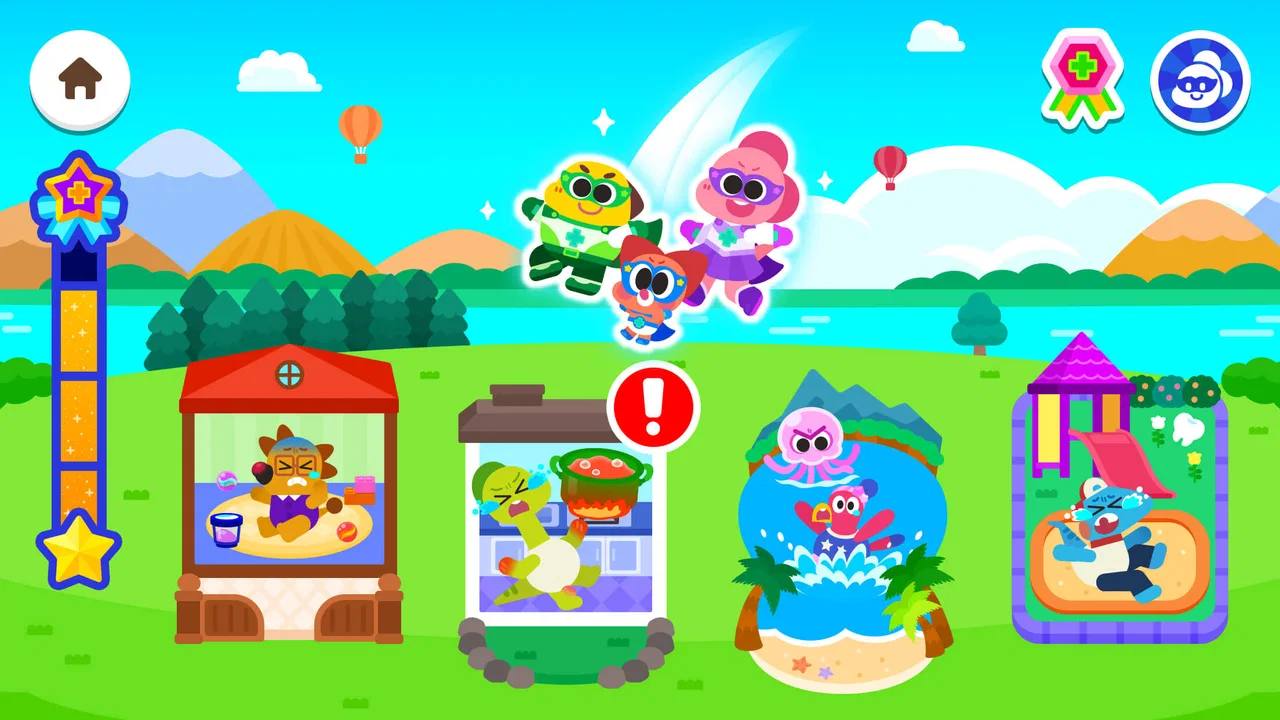
I found Cocobi Little Safety Hero -kid most useful as a short, guided learning game rather than something children play for long sessions. Its idea is simple: kids join Cocobi in safety-themed activities and learn through interaction instead of sitting through a lecture. That makes it a natural fit for parents who want to introduce everyday safety habits in a friendly way, especially when a child learns better by tapping, choosing, and trying again.
The game comes from KIGLE and sits in the educational games category. It is free to start, aimed at Everyone, and currently appears as version 1.0.0 for devices running Android 7.0 or later. The store page shows a 3.8 average from around 80 ratings and over 100K installs, so it has attracted a modest but meaningful audience without being one of the enormous mainstream children’s titles.
How the safety-learning workflow feels in everyday use
My preferred way to use it is as a focused activity with an adult nearby, not as an automatic replacement for conversation. A child can play through a safety situation, make a choice, and see the result. I then ask what they would do at home, on the street, or in another familiar place. That extra question turns a tap-based activity into a practical reminder.
You May Also Like

 Blood Strike: 2.5 Anniversary
Blood Strike’s Loadouts Turn Every Drop Into a Tactical Gamble
A close look at Blood Strike’s custom loadouts: how fast access to signature weapons reshapes its battle royale rhythm, rewards preparation, and narrows the gap between fights.

 Pandora - Music & Podcasts
Pandora’s Music Is Easy to Start, but Harder to Recover
Pandora’s strength is its low-effort path from a seed to a station. Its weak spot is how much confidence it asks you to place in connection, setup, and quiet recovery.

 8 Ball Pool
 Is Built on Rivalries, Rematches, and Routine
A close look at the rivalries, rematches, shared routines, and unanswered safety questions that turn a quick pool match into a persistent mobile community.

 Samsung Music
’s Quiet Strength Is Playing What You Already Own
Its reach comes less from spectacle than from dependable access to a personal library. That simplicity is both the app’s strongest retention engine and its ceiling.

 AccuWeather: Weather Radar
AccuWeather Review: A Quick, Clear Forecast for Everyday Decisions
For everyday plans, the best forecast is the one you can understand quickly. AccuWeather makes rain timing, radar, and local conditions easy to act on, with a few trade-offs.

 Hill Climb Racing
Why Hill Climb Racing Still Turns Crashes Into One More Run
A tiny car, a bumpy hill and one more upgrade: Hill Climb Racing keeps resurfacing because its simple chaos makes every near-miss feel personal.
More From Our News Desk



A realistic example is a short session before leaving for school. Instead of handing over a phone for unlimited entertainment, I would let a child complete one or two activities, then connect the lesson to that morning’s routine: staying close in a parking area, paying attention near a road, or asking a trusted adult for help. The game works best as a prompt for that conversation. It is less convincing when treated as a complete safety course on its own.
The presentation is clearly designed for young children. Cocobi gives the subject a friendly face, which helps soften topics that might otherwise feel frightening. That tone is one of the game’s strongest choices. A child is more likely to revisit a lesson when the experience feels like play rather than a warning delivered by an adult.
At the same time, parents should watch the first few sessions. Young players may focus on discovering what happens when they tap rather than understanding why a particular action is safer. I would pause after an activity and ask the child to explain the choice in their own words. If they can repeat the reason, the game has done more than provide a moment of amusement.
The basic workflow is easy to repeat: open the game, choose an activity, let the child attempt it, and discuss the result. That simplicity matters for preschool and early-primary users, who can lose interest when menus are crowded or instructions require strong reading skills. It also means an adult can join without needing to learn a complicated control system first.
Who gets the most from it
I would recommend it most to families looking for a gentle introduction to safety topics, particularly children who enjoy animated characters and simple interactive tasks. It can also suit a caregiver who needs a short, purposeful activity during a transition, such as waiting for an appointment or settling down after dinner.
It is not the right choice for an older child who wants deep problem-solving, open-ended exploration, or a substantial adventure game. The educational purpose narrows the experience, and that is intentional. A child who already understands the basic lessons may find the activities too straightforward compared with a dedicated puzzle game or a more detailed learning platform.
It also should not replace direct teaching. No game can account for every family routine, neighborhood, language need, or emergency plan. I would use the app to introduce ideas, then teach the exact behavior expected in the child’s real surroundings. For example, “stay with an adult” may need to become a specific family rule about where to wait and whom to approach.
Settings and preparation that make sessions smoother
There is no advantage in rushing directly into play. Before giving the device to a child, I would check the phone’s general setup: sound level, screen brightness, battery, and whether distracting notifications are likely to appear. Those are not special controls inside the game, but they make a noticeable difference to a young child’s attention.
I would also decide in advance whether the child will play independently or with supervision. For a first session, shared play is better. It lets an adult notice whether the child understands the safety message or is simply guessing until the game responds positively. Once the child recognizes the interaction pattern, a short independent session can work, provided the device itself is already configured appropriately.
The free entry point is helpful for trying the experience without committing money. There are in-app purchases priced at $1.49 per item, so I would review the purchase controls on the device before handing it over. This is especially important when a child is exploring menus and may interpret every visible option as part of the game. A parent-managed setup prevents an educational activity from becoming an accidental buying exercise.
The Everyone age rating makes the game approachable for a broad family audience, but an age label is not a substitute for observing your own child. Reading ability, attention span, and comfort with safety topics vary widely. A younger child may need spoken explanations, while an older child may be ready to discuss why a rule changes depending on the situation.
Because the current version is 1.0.0, I would keep expectations realistic about polish and depth. The starting release is easy to approach, but families should judge it by how well the available activities fit their child rather than assuming it will grow into a large learning suite. If the child enjoys it, repeating selected lessons can be useful; if the same interaction quickly becomes predictable, another educational resource may be a better companion.
Repeatable habits for faster, better learning
Experienced use is less about finding secret shortcuts and more about creating a consistent routine. I would keep sessions short, choose a clear purpose, and finish with one question. “What should you do first?” is more useful than asking whether the child liked the activity, because it checks whether the lesson transferred from the screen to memory.
Another effective pattern is to connect the game to a real event. After playing a relevant activity, practice the same behavior during a walk, a trip to a shop, or a visit to a playground. This gives the child a chance to use the idea without the game guiding every step. The app introduces the subject; real life tests whether the child can recognize it.
I would avoid replaying the same activity repeatedly in one sitting just to keep the child occupied. Repetition can help, but too much can turn the lesson into a memorized tapping sequence. A better approach is to return on a different day and ask the child to describe the safe choice before starting. If they can explain it first, the replay becomes reinforcement rather than simple pattern matching.
For siblings, turn-taking can make the experience more useful, but it can also create pressure. I would let one child play while the other explains what they think should happen, then swap roles. This works only when the children can cooperate; otherwise, the louder player may dominate and the quieter child may learn very little. Separate short sessions are preferable to a competitive argument.
Adults can also use the game to identify gaps in their own explanations. If a child repeatedly chooses an unsafe response, I would not assume they were careless. Perhaps the family rule was vague, or the child has never encountered that situation. The valuable step is to clarify the rule in plain language and demonstrate it away from the screen.
Compared with a printed safety worksheet, this game offers immediate interaction and a more inviting character-led presentation. Compared with a general children’s video, it gives the child something to do rather than only something to watch. Its trade-off is that it may cover ideas in a simplified way, while a parent, teacher, or specialist resource can adapt the explanation to a child’s exact needs.
Where the limits become important
The biggest limitation is the distance between a game choice and real-world judgment. A child may learn the expected answer inside a familiar activity but still freeze, forget, or follow another child in an actual situation. That is why I would treat the app as rehearsal, not certification. The adult’s follow-up matters as much as the child’s success on screen.
Another limitation is replay value. Safety education does not need endless content to be worthwhile, but children who expect a large collection of challenges may finish the available material quickly. If your main goal is long-term entertainment, this is probably too narrow. If your goal is to introduce a few important habits in an approachable format, the limited scope is less of a problem.
The game may also be a poor fit for households that need detailed accessibility or language customization. A child who cannot comfortably follow the presentation may need a resource designed around their communication style. I would test the opening activities with the child rather than assuming the cartoon format will automatically make every lesson understandable.
Parents should be careful with the word “hero” in the theme. It can make safety feel exciting, but real safety often means stopping, waiting, asking for help, or avoiding a risky situation. I would reinforce that the goal is not to be brave in a dangerous moment. The goal is to recognize risk and choose a sensible action.
The rating information also deserves context. A 3.8 average from around 80 ratings suggests a generally mixed-to-positive reception, but it is not enough to predict whether every child will enjoy the experience. I would use the rating as a reason to try it, not as proof that it will suit a particular age, temperament, or learning need.
My verdict after using it as a learning companion
The best way to approach Cocobi Little Safety Hero -kid is as a short, supervised conversation starter. It gives children a friendlier route into safety topics and makes the first explanation less formal. KIGLE has chosen an accessible format: familiar characters, simple interaction, and lessons that can be discussed immediately after play.
I like it for families that want a free starting point and are willing to stay involved. The free download lowers the barrier to testing it, while the low-cost individual purchases make it important to check device purchase controls before a child explores alone. The game’s Everyone rating also makes it easy to consider for a family audience, though the right level of adult help will depend on the child.
I would skip it if you are searching for a deep educational curriculum, a long adventure, or a substitute for practical safety instruction. A dedicated learning program may offer more progression, and direct practice will always be necessary. This title is strongest in the space between a conversation and a worksheet: it gives the child an interactive example that an adult can turn into a real habit.
My final recommendation is to build a small routine around it. Play one activity, ask the child to explain the safe choice, then practice that behavior during the day. Used that way, the game earns its place on a family device. Used as unattended screen time, it loses much of what makes it valuable.
FAQs for Cocobi Little Safety Hero -kid
01What age group is Cocobi Little Safety Hero -kid suitable for?
Cocobi Little Safety Hero -kid is designed for children aged 3 to 8 years old. The app offers engaging and educational activities tailored to young minds, focusing on teaching safety skills through interactive gameplay. Parents can rest assured that the content is age-appropriate and safe for young children.
02Does Cocobi Little Safety Hero -kid require an internet connection?
Cocobi Little Safety Hero -kid does not require a constant internet connection to play. Once the app is downloaded, kids can access most features offline, making it convenient for use during travel or in areas with limited connectivity. However, some content updates may require internet access.
03Are there any in-app purchases or ads in Cocobi Little Safety Hero -kid?
Cocobi Little Safety Hero -kid is free to download with some in-app purchases available for additional content and features. The app is ad-free to provide a seamless and uninterrupted experience for children, ensuring that their focus remains on learning and playing safely.
04How does Cocobi Little Safety Hero -kid ensure my child's data privacy?
Cocobi Little Safety Hero -kid adheres to strict privacy policies to protect your child's data. The app collects minimal information necessary for functionality and complies with COPPA regulations. No personal data is shared with third parties, and parental consent is required for any data collection.
05What kind of safety topics does Cocobi Little Safety Hero -kid cover?
Cocobi Little Safety Hero -kid covers a wide range of safety topics, including road safety, fire prevention, and stranger danger. The app uses fun characters and scenarios to teach children how to react in various situations, reinforcing good habits and safety awareness through gameplay and interactive lessons.
Pros
- Engaging and educational gameplay.
- Colorful graphics appeal to children.
- Teaches basic safety concepts.
- Easy-to-navigate interface.
- Parental controls enhance safety.
Cons
- Limited levels may reduce replay value.
- Requires internet for some features.
- Ads can interrupt gameplay.
- In-app purchases might be costly.
- Audio options are limited.

Cocobi Little Safety Hero -kid
Gallery